
Training
Fox World Travel Concur Support Desk
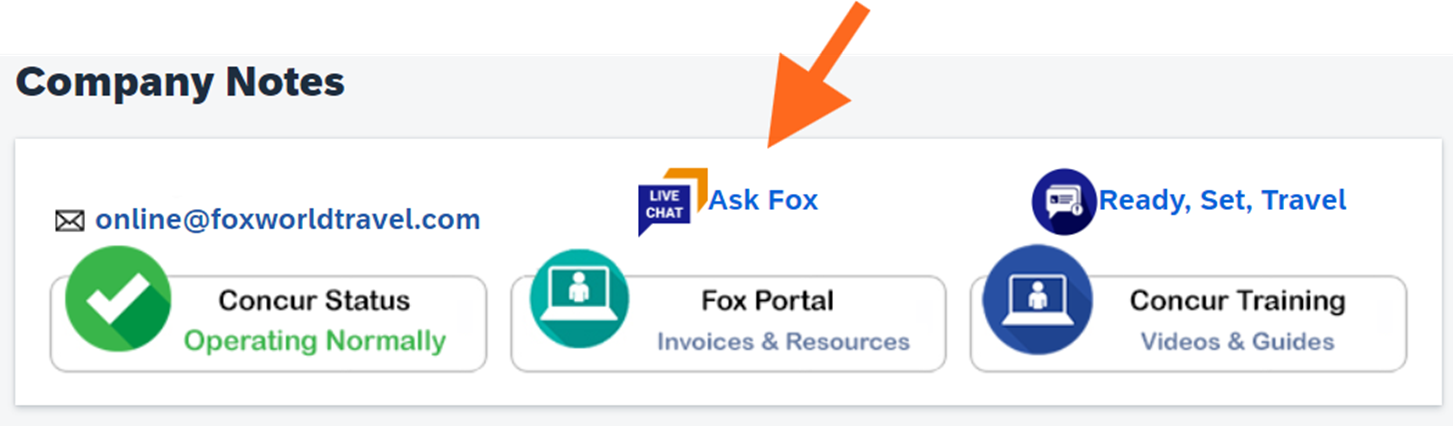
Fox World Travel is available to support your Concur questions. Contact support via phone at 608-710-4172, via email at online@foxworldtravel.com or via chat in the Concur application.

Additional Support
Contact your institution’s travel manager for additional support questions.
Personalized SAP Concur Open Updates
Personalized up-to-the-minute service availability and performance information
-
OPI-6336471 : US2 : Travel : Issue Resolved
26 October 2026 | 4:12 pm
We identified and resolved a service degradation affecting the Concur Travel service. Full Customer Base Impact will be provided when available. This issue was intermittently affecting travel searches in New Concur Travel. After entering search criteria and clicking the Search button, users may have received the error message: "Sorry, something went wrong." When this error occurred, search results were not returned. Legacy Travel was not impacted by this issue. Workaround: We identified a potential workaround. Because the impact was intermittent, users may have been able to successfully complete their travel searches after making multiple attempts. The Incident Response Team took action to to upgrade an instance type to restore service. We have verified that service performance is stable and will now resolve the incident. An investigation into the root cause of this incident will be conducted, and a root cause analysis report provided when that investigation is complete.
-
OPI-6336471 : US2 : Travel : Issue Status Update
26 October 2026 | 3:41 pm
We identified and resolved a service degradation affecting the Concur Travel service. Full Customer Base Impact will be provided when available. This issue was intermittently affecting travel searches in New Concur Travel. After entering search criteria and clicking the Search button, users may have received the error message: "Sorry, something went wrong." When this error occurred, search results were not returned. Legacy Travel was not impacted by this issue. Workaround: We identified a potential workaround. Because the impact was intermittent, users may have been able to successfully complete their travel searches after making multiple attempts. Services have returned to normal operating levels. We will continue to monitor for the next 15-30 minutes to verify stability. Once verified as stable the incident will be resolved.